Published: September 21, 2026
The electric tuk tuk market (also known as electric three‑wheeler market) is one of the fastest‑growing segments of global electric mobility, delivering affordable zero‑emission passenger transport and last‑mile cargo logistics for emerging‑market cities. Driven by urban congestion, high fossil‑fuel prices, government EV incentives and falling lithium‑ion battery costs, electric tuk tuks are replacing millions of internal‑combustion auto‑rickshaws across Asia‑Pacific, Latin America, and Africa.
In this guide, we break down the electric tuk tuk market size, regional performance, key market drivers & restraints, product segmentation, import‑homologation requirements for cross‑border importers, major industry risks, competitive landscape and future opportunities for OEMs, distributors and fleet operators.
1. Global Electric Tuk Tuk Market Size & Key Statistics
Multiple independent market research reports confirm robust double‑digit expansion for the electric tuk tuk market through 2034.
- The global electric tuk‑tuk market was valued at USD 1.08 billion in 2025 and is projected to reach USD 2.52 billion by 2034, growing at a CAGR of 9.8% from 2025‑2034.
- According to IEA Global EV Outlook 2026, global electric three‑wheeler sales exceeded 1.2 million units in 2025, capturing more than 25 % share of the total three‑wheeler volume worldwideIEA.
- Passenger‑carrier electric tuk tuks hold the dominant product share at 62.5 % of total market revenue, while cargo/load‑carrier tuk‑tuks are the fastest‑rising sub‑segment for e‑commerce last‑mile delivery.
- Asia‑Pacific remains the dominant region, accounting for 68.2 % of global revenue share in 2025, led by India, China and Southeast Asian markets. India alone represents the world’s largest electric three‑wheeler market; in August 2026 electric models made up 65.3 % of domestic three‑wheeler retail sales.
- Latin America is a high‑growth emerging zone, forecast to expand at a CAGR of 13.2 % for 2026‑2034, holding roughly 9.4 % global market share in 2025; key target countries are Colombia, Peru, Ecuador, Chile and Mexico.
- Middle‑East & Africa registers the highest regional growth rate at 12.6 % CAGR to 2034, supported by import‑duty waivers for electric three‑wheelers in Rwanda, Kenya and Bangladesh.
Note: Market figures refer to road‑legal electric three‑wheelers (tuk‑tuks / auto‑rickshaws); off‑road golf‑style utility vehicles are excluded from core market sizing.
2. Electric Tuk Tuk Market Segmentation
The electric tuk tuk market can be split along three core dimensions: vehicle use‑case, battery technology and geographic region.
2.1 By Vehicle Type
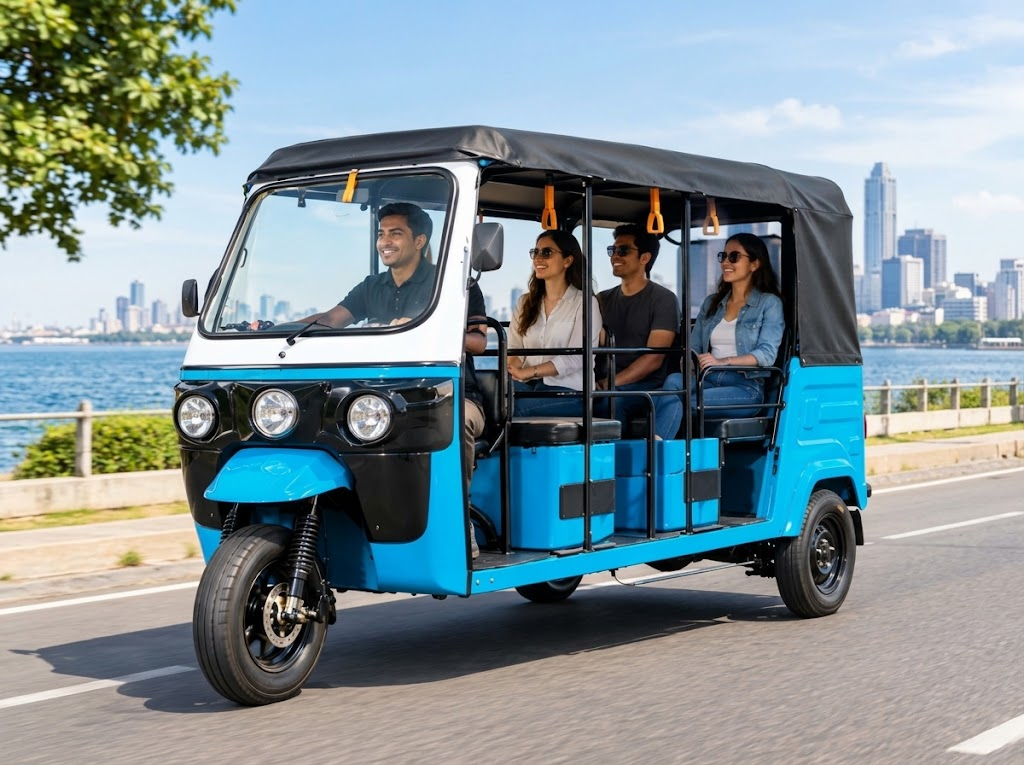
- Passenger Electric Tuk‑Tuk (62.5 % market share) Designed for shared taxi, paratransit and urban short‑haul passenger trips. Typical capacity ranges from 3‑6 passengers. Demand is strongest in densely‑populated Tier‑2 & Tier‑3 cities across India, Southeast Asia and Latin America.
- Cargo / Load‑Carrier Electric Tuk‑Tuk (37.5 % market share, fastest growing sub‑segment) Built for last‑mile parcel, food‑delivery and small‑goods logistics. E‑commerce boom is driving fleet procurement from logistics aggregators. Maximum payload commonly ranges from 300 kg‑600 kg depending on chassis configuration.
2.2 By Battery Type
- Lithium‑Ion Battery: Dominating new‑model roll‑outs. Lighter weight, longer cycle life, swappable‑battery compatibility. Higher upfront cost but lower total‑cost‑of‑ownership over vehicle lifetime.
- Lead‑Acid Battery: Lower‑cost entry‑level option, widely deployed in low‑income markets. Heavier, shorter service cycles, lower energy density.
2.3 By Regional Market
表格
| Region | 2025 Market Share | Core Market Features |
|---|---|---|
| Asia‑Pacific | 68.2 % | Mature large‑volume market; heavy government subsidies; India is top‑volume country |
| Latin America | 9.4 % | Fast‑growing import‑driven market; many countries apply preferential zero‑or‑low import tariffs for EVs; Chile, Colombia, Peru lead adoption |
| Middle‑East & Africa | 6.1 % | Highest‑CAGR region; strong demand for affordable passenger & cargo mobility; import‑duty incentives in multiple nations |
| Europe & North America | Remaining share | Niche use‑cases: tourist transport, inner‑city zero‑emission delivery fleets; strict homologation rules |
3. Key Market Drivers for the Electric Tuk Tuk Market
3.1 Lower Operating Cost vs Diesel Auto‑Rickshaws
Electric tuk‑tuks deliver 60‑75 % reduction in per‑kilometer running costs compared to fossil‑fuel three‑wheelers. For owner‑operators and fleet companies, payback periods can fall below 24 months in markets with supportive subsidies and high daily vehicle utilisation.
3.2 Government Policy & EV Subsidies
Multiple governments roll out purchase subsidies, import‑duty exemptions and registration‑fee waivers to push three‑wheeler electrification:
- India’s FAME‑II scheme allocated ~USD 1.2 billion for EV adoption with major support for electric three‑wheelers, cutting acquisition cost by 25‑40 % versus diesel counterparts.
- Bangladesh’s national transport plan targets converting 500 000 three‑wheelers to electric powertrains by 2030 with import‑tax reliefs.
- Latin‑American nations such as Chile apply zero import tariffs for EVs under China‑Chile FTA, creating favourable import conditions for Chinese‑manufactured electric tuk‑tuks.
3.3 Urban Congestion & Last‑Mile Logistics Growth
Electric tuk‑tuks excel in narrow city streets, congested downtown zones and peri‑urban neighbourhoods where larger cars or delivery vans face access restrictions. Global e‑commerce expansion is generating surging demand for compact zero‑emission cargo three‑wheelers for final‑kilometer distribution.
3.4 Falling Lithium‑Ion Battery Prices
Lithium‑ion battery pack prices keep declining year‑over‑year, narrowing the upfront‑cost gap between electric tuk‑tuks and traditional ICE rickshaws, improving commercial viability for distributors and end‑users alike.
4. Major Market Challenges & Restraints
Despite strong growth outlook, the electric tuk tuk market still faces critical barriers limiting faster global penetration.
- High Up‑Front Acquisition Cost Even with subsidies, lithium‑ion electric tuk‑tuks carry higher purchase price than used diesel three‑wheelers. Limited consumer financing options in emerging markets slows adoption among individual owner‑drivers.
- Inconsistent Homologation & Import Certification Rules Regulatory frameworks differ widely country‑by‑country. Many Latin‑American and African markets lack dedicated technical standards for three‑wheeler EVs. Importers risk vehicle detention at ports if missing required COC (Certificate of Conformity), UN38.3 battery safety certification, Spanish‑language technical datasheets or certificates‑of‑origin for preferential tariff treatment.
- Charging‑Infrastructure Gaps Rural and peri‑urban zones suffer insufficient public charging points. Battery‑swapping models help mitigate range‑anxiety but require heavy upfront investment in swap‑station networks.
- After‑Sales & Spare‑Parts Shortage Many import‑focused markets lack trained local EV technicians and readily‑available spare‑parts inventory for electric tuk‑tuks. Poor post‑sales support erodes end‑user trust and slows repeat‑order business for distributors.
- Battery‑Safety Concerns Low‑cost uncertified battery packs create fire‑risk hazards, harming industry reputation. International safety standards including UN38.3, IEC 62133 are mandatory for cross‑border shipments of lithium‑ion‑equipped electric tuk‑tuks.
5. Import & Homologation Requirements for Electric Tuk‑Tuks (Cross‑Border Importer Guide)
For B2B importers bringing electric tuk‑tuks into Latin‑America, Africa or other overseas markets, homologation and regulatory compliance are mandatory pre‑shipping steps, mirroring certification workflows for light‑EV imports in Chile and neighbouring nations.
Critical rule: Complete homologation before container shipment. Vehicles arriving without valid Certificate of Conformity risk customs detention, storage fees or forced re‑export.
5.1 Core Mandatory Documentation Checklist
- Commercial documents: Original commercial invoice, packing list, ocean bill‑of‑lading / air‑waybill, international cargo‑insurance policy.
- Certificate‑of‑Origin: Required to qualify for FTA preferential zero‑tariff rates (example: China‑Chile Free‑Trade‑Agreement). Issued by official trade‑promotion bodies such as CCPIT for Chinese exports.
- Technical regulatory documents:
- Vehicle technical datasheet in official local language (Spanish for most Latin‑American countries).
- OEM‑issued Certificate of Conformity (COC / Homologation Certificate).
- Lithium‑battery safety certificates: UN38.3 transport certification, IEC 62133 safety report, MSDS material‑safety‑data‑sheet for battery packs.
- Local‑language owner’s manual, electrical‑system schematic drawings, battery‑specification sheets.
- Additional paperwork: Fumigation certificate for wooden packaging materials, manufacturer authorization letter for the importing distributor.
5.2 Typical Homologation Workflow
- Pre‑evaluation: Identify national technical standards for three‑wheeler EVs of target import market; confirm classification (passenger‑tuk‑tuk or cargo‑tuk‑tuk). Mis‑classification will trigger wrong homologation requirements.
- Gather full technical dossier from OEM: international test‑reports (ECE‑R, ISO, IEC), factory ISO 9001 certification, battery safety reports.
- Engage accredited local certification body: INN‑accredited labs in Chile, SGS, Bureau‑Veritas, TÜV‑Rheinland or regional authorised test‑houses.
- Document review + lab testing (if required): Test items usually cover braking performance, lighting, stability, electromagnetic‑compatibility, high‑voltage‑electrical‑safety and battery‑system safety. Prototype sample shipment may be needed for physical lab tests.
- Issue official Certificate of Conformity: Valid for the specific vehicle model for all import batches of that model. Keep copies available for customs inspections at every shipment.
Industry benchmark timeline: Full homologation for an electric tuk‑tuk model commonly takes 6‑14 weeks, depending on required laboratory testing and local‑authority processing speed.
5.3 Post‑Customs Registration Steps
After customs clearance and duty payment, vehicles must pass authorised technical inspection, obtain national‑vehicle‑registry enrolment, receive license plates, and secure mandatory third‑party accident‑insurance before legal public‑road circulation — matching registration workflows for imported electric passenger vehicles.
6. Competitive Landscape of Electric Tuk Tuk Market
The global electric tuk‑tuk market mixes established Indian ICE‑three‑wheeler OEMs, Chinese EV manufacturers, regional niche‑EV builders and European specialist suppliers.
- India‑based players: Bajaj Auto, Mahindra Electric Mobility, TVS Motor, Kinetic Green dominate high‑volume domestic and South‑Asian export markets. Bajaj Auto led Indian retail volumes in FY2026 with strong electric three‑wheeler sales growth.
- Chinese OEM manufacturers: Major export‑oriented suppliers deliver cost‑competitive passenger and cargo electric tuk‑tuks for Latin‑America, Africa and Southeast‑Asia import markets, offering complete homologation‑ready documentation packages for overseas distributors.
- International niche‑market suppliers: Piaggio Group (Italy), E‑Tuk Factory (Netherlands), Terra Motors (Japan) focus on premium‑specification tuk‑tuks for tourism and urban‑delivery fleets in Europe and Latin‑America.
Key competitive success factors for suppliers: model‑level homologation support, complete multilingual technical‑document sets, UN38.3‑compliant battery‑packs, competitive total‑cost‑of‑ownership, and commitment to spare‑parts & after‑sales‑training for import‑market partners.
7. Common Cost Estimates for Importing Electric Tuk‑Tuks (Example for Latin‑America FTA Zero‑Tariff Scenario)
Sample calculation for one lithium‑ion passenger electric tuk‑tuk:
表格
| Cost Item | Estimated Value (USD) |
|---|---|
| FOB factory price | $3 200 |
| Ocean freight (China to Chile port) | $380 |
| International marine insurance | $70 |
| CIF value | $3 650 |
| Import customs duty (0 % under China‑Chile FTA) | $0 |
| Local VAT (19 % applied to CIF value) | $693.50 |
| Port handling & customs‑broker professional fees | $185 |
| Inland transport from port to importer warehouse | $120 |
| Per‑unit landed cost (excluding one‑time‑model homologation amortisation) | ~ $4 648.50 |
Additional one‑time‑model‑cost: Homologation certification typically USD 2 200‑5 000 per vehicle model, amortised over total import volume of that model. Per‑unit technical‑inspection, registry‑licensing & mandatory‑insurance fees range USD 80‑160 per unit. Larger full‑container‑load shipments significantly reduce per‑unit logistics overheads.
8. Common Pitfalls for Electric Tuk‑Tuk Importers & How to Avoid Them
❌ Mistake 1: Start shipping containers before finishing homologation
- Risk: Vehicles held at port, accruing expensive demurrage storage‑charges or forced re‑export.
- Solution: Complete full homologation process and receive official Certificate‑of‑Conformity before dispatching first shipment.
❌ Mistake 2: Missing valid Certificate‑of‑Origin ‑Risk: Lose preferential zero‑tariff eligibility and be forced to pay full standard import‑duty. ‑Solution: Confirm OEM arranges official Certificate‑of‑Origin issued by authorised trade‑body for every export batch.
❌ Mistake 3: Wrong vehicle classification (mix‑up passenger vs cargo tuk‑tuk) ‑Risk: Applying incorrect homologation test‑requirements, document rejection by certification‑authorities and customs. ‑Solution: Work together with local homologation‑specialist to define correct vehicle classification before submitting technical‑dossiers.
❌ Mistake 4: Incomplete or wrong‑language technical documentation ‑Risk: Rejection of homologation‑application. Many Latin‑American authorities require datasheets and manuals in Spanish, not only English or Chinese. ‑Solution: Request OEM to deliver fully‑translated, complete technical‑document set ready‑for‑submission to local certification‑bodies.
❌ Mistake 5: Ignore after‑sales‑service and spare‑parts planning ‑Risk: Selling vehicles without spare‑parts inventory or trained technicians leads to high customer complaints, warranty‑claims and damaged brand‑reputation. ‑Solution: Build spare‑parts stock and organise local‑technician training before commencing retail sales of imported electric tuk‑tuks.
9. Future Opportunities in the Electric Tuk Tuk Market
- Latin‑American import‑market expansion: Countries including Chile, Peru, Colombia and Ecuador represent high‑potential import‑driven growth markets, boosted by EV‑friendly import‑tariff policies, rising urban‑e‑commerce‑logistics demand and growing consumer awareness of zero‑emission mobility.
- Cargo electric‑tuk‑tuk segment growth: E‑commerce‑driven last‑mile‑delivery will generate strong new‑volume demand for load‑carrier electric‑three‑wheelers across emerging‑market cities.
- Battery‑swapping‑ecosystem integration: Swappable‑lithium‑battery‑platforms reduce end‑user range‑anxiety and cut down‑time for commercial‑fleet‑operators, opening new business‑models combining vehicle‑sales plus battery‑as‑a‑service.
- Tourism‑sector niche demand: Custom‑built low‑speed electric‑tuk‑tuks are increasingly deployed for resort, historic‑district and city‑sightseeing shuttle‑services across Latin‑America, Europe and Southeast‑Asia.
Conclusion
The electric tuk tuk market is undergoing meaningful global expansion, supported by urban‑mobility‑pain‑points, government EV‑policy‑support and advancing battery‑technology. While Asia‑Pacific continues to dominate total‑volume sales, Latin‑America and Africa deliver attractive high‑CAGR opportunities for OEMs and cross‑border importers.
For importers, successful market entry depends heavily on early homologation planning, complete and correct regulatory‑documentation (including Certificate‑of‑Origin, UN38.3 battery‑safety‑certificates and local‑language technical‑files), accurate vehicle‑classification, and proactive build‑out of local‑after‑sales‑service and spare‑parts‑inventory.
With correct preparation, electric tuk‑tuks represent a commercially‑viable sustainable‑transport solution for millions of urban commuters and logistics‑operators worldwide through 2034 and beyond.